9 Types of Smart Home Devices to Know
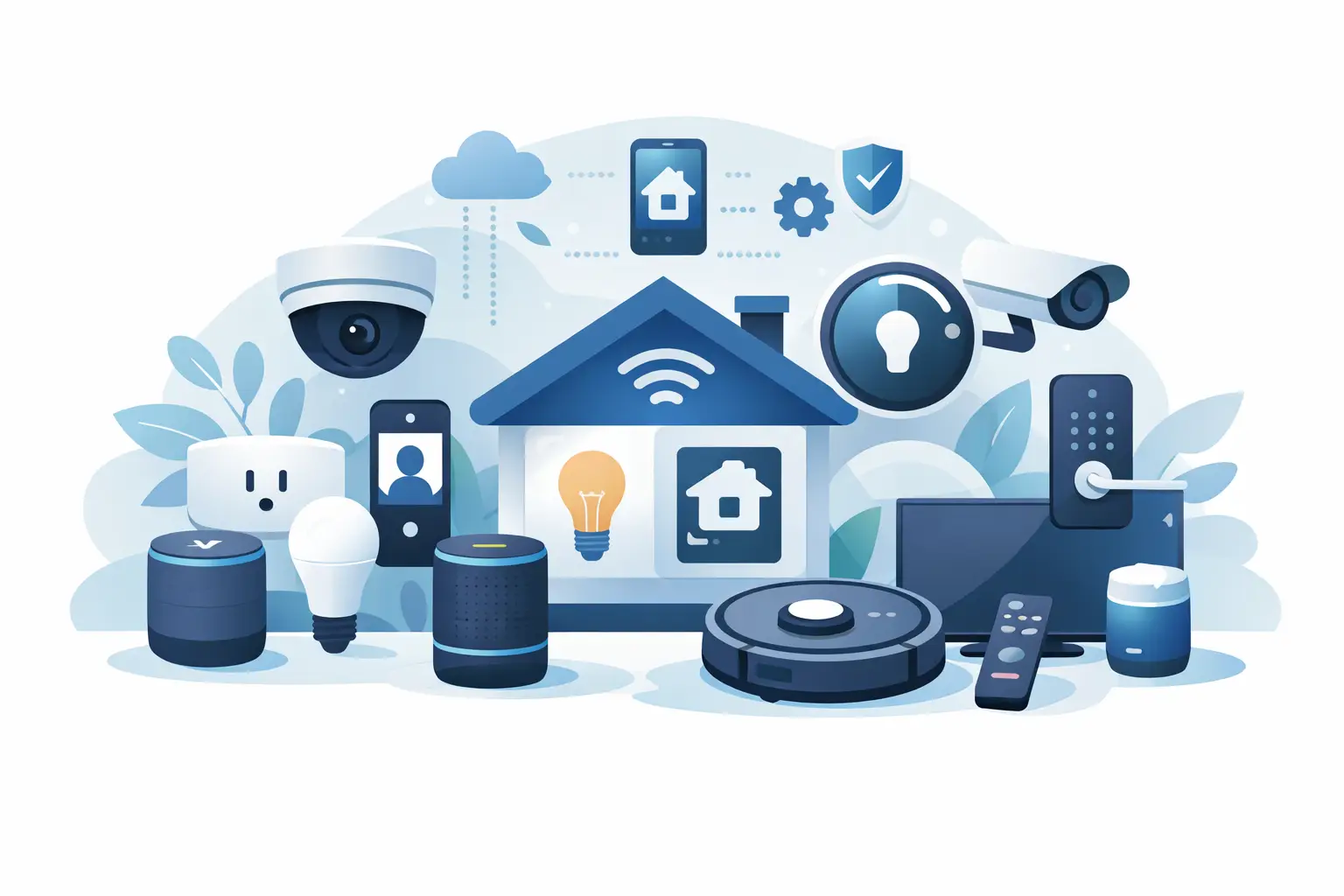
A smart home usually starts with one small upgrade – a video doorbell, a smart bulb, maybe a plug that lets you turn off a lamp from your phone. Then you realize how many types of smart home devices are out there, and not all of them solve the same problem. Some are built for security, some for comfort, and some simply make everyday routines feel easier.
If you’re shopping for your first setup or adding a few fresh upgrades, the key is knowing which categories matter for the way you live. A renter in a city apartment may care more about video doorbells, indoor cameras, and air quality. A homeowner with kids may want locks, alarms, and smart lighting on schedules. The right mix is less about building a futuristic house and more about choosing tech that actually fits your day.
The main types of smart home devices
Most smart home products fall into a few practical categories. Once you understand what each type does, it becomes much easier to shop with confidence instead of guessing based on features alone.
1. Smart security cameras
Security cameras are often the first smart home buy because the value is immediate. You can check your front porch, watch the driveway, keep an eye on pets, or see what is happening inside the house while you’re away. Features vary a lot, though. Some cameras focus on live video and motion alerts, while others add night vision, two-way audio, cloud storage, local recording, or AI-based person detection.
Indoor and outdoor cameras serve different purposes. Indoor models are usually smaller, easier to place, and great for nurseries, entryways, or living rooms. Outdoor cameras need stronger weather resistance and wider coverage. If your priority is deterring package theft or monitoring visitors, placement matters as much as resolution.
2. Video doorbells
Video doorbells sit in their own category because they solve a very specific problem. They show you who is at the door, send motion alerts, and often let you talk to visitors from your phone. For busy households, that means fewer missed deliveries and better visibility when no one is home.
They are especially popular with renters and homeowners who want added awareness without installing a full camera system. Still, they are not perfect for every entryway. Apartment buildings, shared porches, and certain wiring setups can affect performance, so it’s worth checking power options and viewing angle before buying.
3. Smart locks
Smart locks bring convenience and control to one of the most used parts of your home. Instead of relying only on physical keys, you can lock or unlock the door with an app, keypad, fingerprint access, or temporary code. That makes them useful for families, frequent travelers, and anyone who has ever hidden a spare key and hoped for the best.
The trade-off is that smart locks require a little more planning than a basic lock swap. Battery life, door compatibility, and backup entry options all matter. Some shoppers love keyless access right away. Others prefer a hybrid model that keeps a physical key as a fallback. Both can work well depending on your comfort level.
4. Smart alarm systems and sensors
If cameras let you see what is happening, alarm systems are built to react when something goes wrong. This category includes entry sensors, motion detectors, glass break sensors, sirens, and central hubs. Together, they create a more complete layer of protection.
These devices are especially useful for larger homes or anyone who wants alerts beyond video motion. A sensor on a back window can catch activity a camera might miss. A door sensor can tell you when kids get home from school. Some systems are simple and self-monitored, while others are designed to support a broader security setup. The best choice depends on whether you want light-touch awareness or a more serious home protection plan.
Types of smart home devices for comfort and control
Security gets a lot of attention, but many smart home upgrades are really about making your home feel better to live in.
5. Smart lighting
Smart lighting is one of the easiest ways to change the feel of a room. You can dim lights, change color temperature, set schedules, or control fixtures remotely. It sounds simple, but it has a big effect on everyday convenience. Lights can turn on before you get home, switch off automatically at bedtime, or create a softer setup for movie night.
This category also scales well. You can start with one bulb or plug and later expand to multiple rooms. For shoppers who want visible results without a complicated setup, smart lighting is a strong place to begin.
6. Smart plugs and switches
Not every upgrade has to replace the product you already own. Smart plugs and switches let you add app control and automation to standard lamps, coffee makers, fans, and other household devices. That makes them a budget-friendly path into home automation.
They are also practical for people who are still figuring out what they want from a smart home. A plug can test whether scheduled automation actually helps your routine. If it does, you can build from there. If not, you have not overcommitted to a bigger system.
7. Smart thermostats and climate devices
Comfort at home is often about temperature and air quality, not just lighting or convenience. Smart thermostats help manage heating and cooling more efficiently, while connected air purifiers and similar appliances support a cleaner indoor environment. For families, remote workers, and anyone spending long hours at home, these upgrades can make a noticeable difference.
This category tends to have the biggest gap between simple and advanced products. Some devices focus on remote control and scheduling. Others learn your habits or track conditions in real time. More features can be useful, but only if you’ll actually use them. If you just want easier control from your phone, a basic model may be the smarter buy.
Entertainment and lifestyle smart home categories
A smart home is not only about safety and utility. A lot of shoppers want tech that feels good to use and fits into a modern lifestyle.
8. Smart speakers and voice assistants
Smart speakers often become the control center for everything else. They can play music, answer quick questions, set timers, and connect with compatible lights, plugs, locks, and other devices. For many households, voice control is what makes smart tech feel natural instead of like one more app to manage.
That said, voice assistants are very much a preference-based category. Some people use them all day. Others mainly want app-based control and could skip the speaker entirely. If privacy is a major concern, it makes sense to compare settings and decide how much voice integration you really want.
9. Smart kitchen and lifestyle appliances
This category is broader, but it matters because it brings smart tech into daily routines beyond security. App-connected blenders, beauty tools, mini fridges, air purifiers, and small home appliances can add convenience in ways that feel less technical and more lifestyle-driven. That is part of why smart home shopping has become more mainstream – the products are not limited to gadgets for enthusiasts anymore.
The catch is that not every appliance needs to be smart. Sometimes connected features are genuinely useful, and sometimes they are just a nice extra. If app control saves time, improves monitoring, or fits how you use the product, it may be worth it. If not, simplicity can still win.
How to choose between types of smart home devices
The best way to choose is to shop by problem, not by trend. If your biggest concern is package theft, start with a doorbell or outdoor camera. If your routine feels scattered, lighting, plugs, or a smart speaker may give you the fastest payoff. If home access is the hassle, a lock makes more sense than buying multiple gadgets you may never use.
It also helps to think in layers. A camera handles visibility. A lock handles entry. A sensor handles alerts. A plug or bulb handles convenience. When categories work together, the experience feels more useful and less random.
Compatibility matters too. Before buying across multiple categories, check whether the devices work with the same app ecosystem or voice platform. Mixing brands is common, but it can create friction if every product needs separate setup and control. For shoppers who want a cleaner experience, choosing products that play well together is often worth more than chasing the newest feature.
Price should be part of the decision, but not the only part. A lower-cost device can be a great entry point, especially for first-time buyers. At the same time, for security products like locks, alarms, and cameras, reliability matters just as much as the sticker price. The best value is usually the device you’ll actually use consistently, not the one with the longest feature list.
Smart home tech works best when it feels like a natural upgrade to your everyday life. Start with the category that solves the most obvious need, then build at your own pace. If you want modern living to feel simpler, safer, and a little more connected, the right device is usually the one that saves you time the moment you bring it home.